
By Kevin McAteer
Clanrye News & Sport constituency-by-constituency working projection
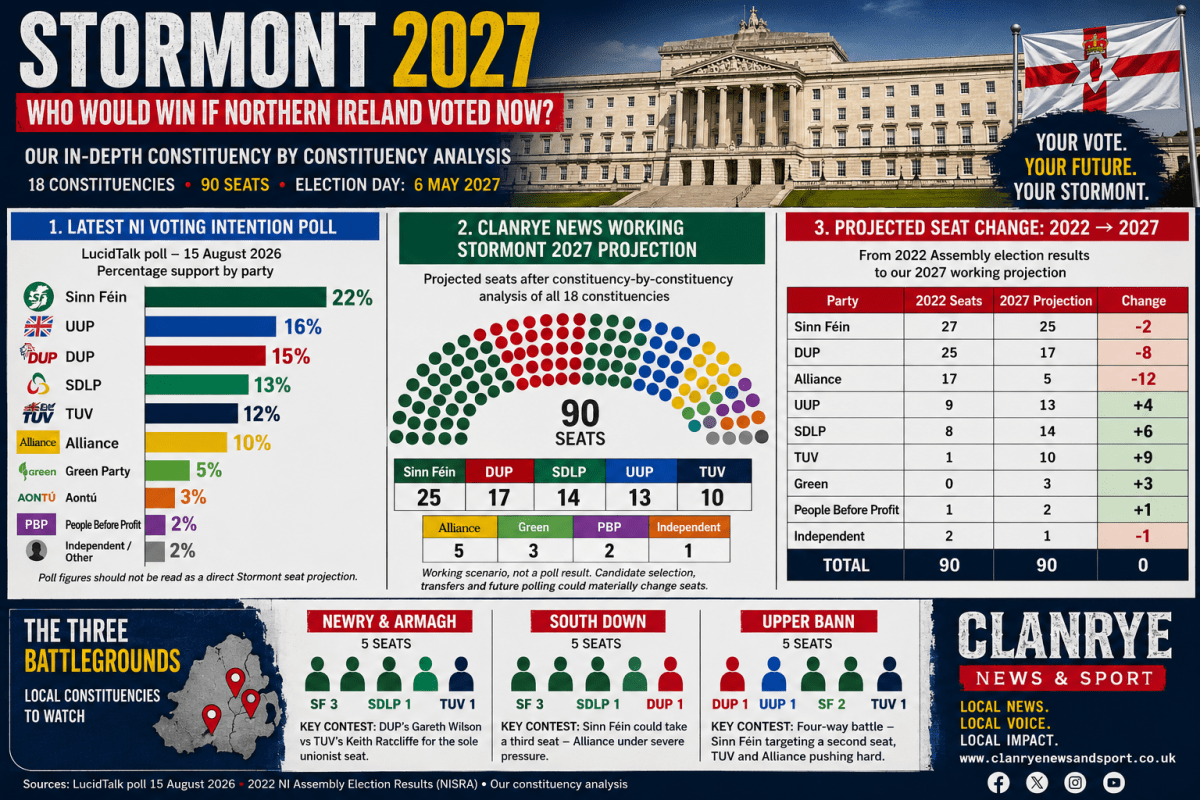
A new LucidTalk poll has placed Sinn Féin on 22%, the UUP on 16%, the DUP on 15%, the SDLP on 13%, the TUV on 12% and Alliance on 10%, pointing to the possibility of a major shake-up at the next Assembly election. But Northern Ireland elects MLAs by STV, so a province-wide percentage cannot simply be converted into seats. Clanrye News & Sport has therefore built a working scenario constituency by constituency, taking account of the 2022 baseline, local strength, likely transfers, candidate strategy and boundary changes.

GRAPH 1: Voting intention used in this analysis. Polling is not a direct seat projection.
The 2022 baseline
The 2022 Assembly election returned Sinn Féin as the largest party with 27 seats, followed by the DUP on 25, Alliance on 17, the UUP on nine and the SDLP on eight. The TUV and People Before Profit each won one seat, while two independents were elected. The election used STV across 18 five-member constituencies, producing a 90-seat Assembly.
Our working 90-seat scenario
After examining all 18 constituencies individually, our current working scenario is Sinn Féin 25, DUP 17, SDLP 14, UUP 13, TUV 10, Alliance five, Green three, People Before Profit two and Independent one. This is a scenario rather than a forecast carved in stone: candidate selection and transfer behaviour can change the final seat in a constituency dramatically.
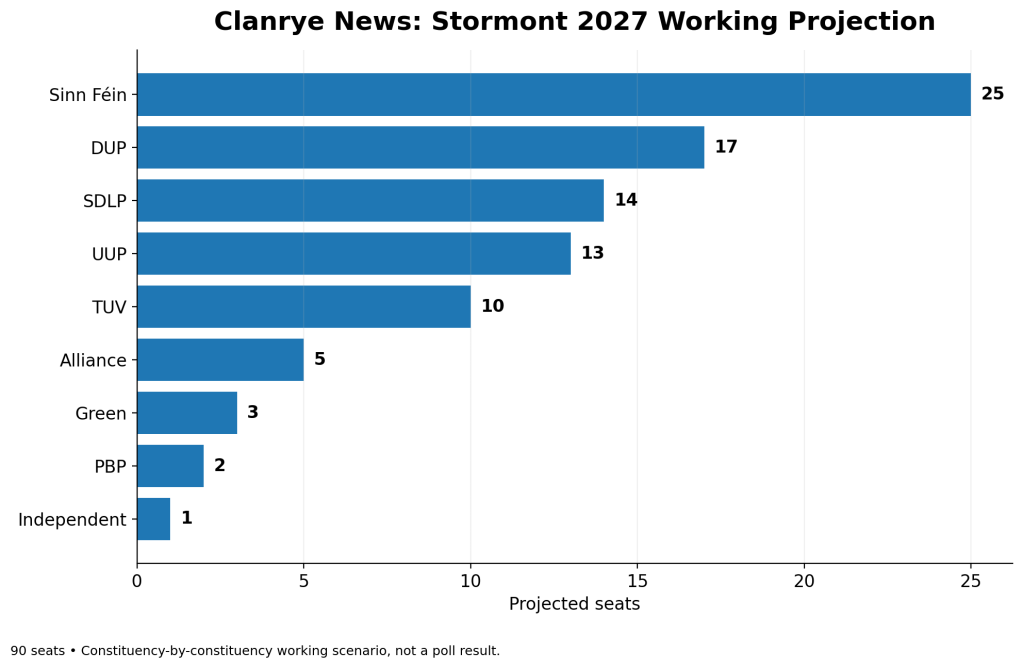
GRAPH 2: Clanrye News & Sport working projection — 90 seats.
Where the political earthquake could happen
The most striking feature of this scenario is fragmentation. Sinn Féin remains comfortably the largest party, but the battle underneath it changes dramatically. The DUP is squeezed by both the UUP and TUV; the SDLP recovers strongly; and Alliance faces the difficult task of defending a 2022 high-water mark in a number of marginal constituencies.
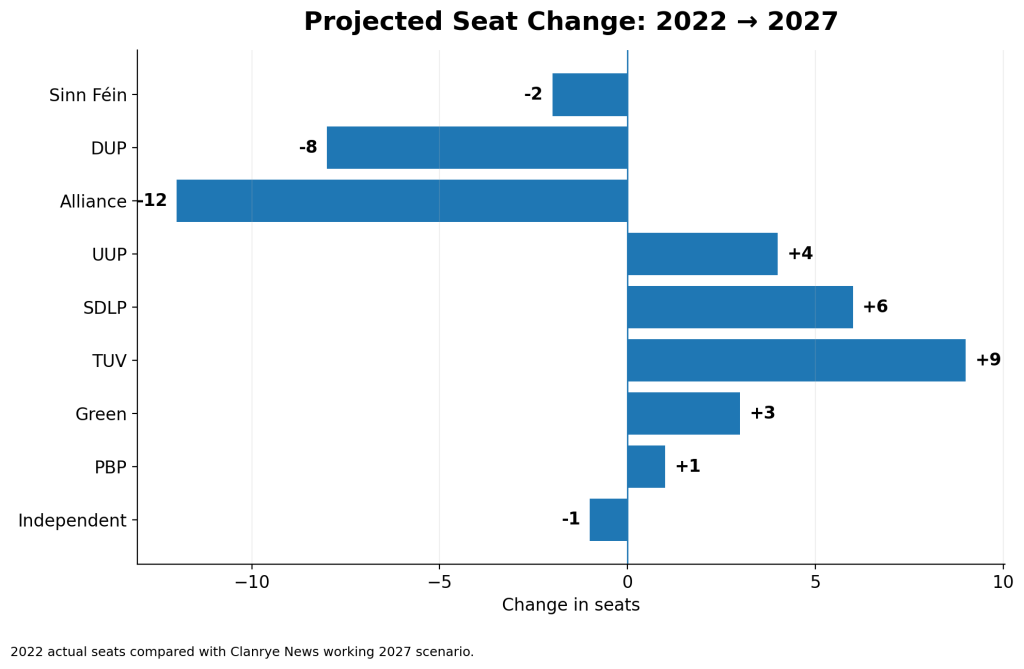
GRAPH 3: Change from the actual 2022 result to our current 2027 working scenario.
Why STV makes this difficult
Under STV, first-preference support is only part of the story. A party can poll strongly but fail to convert that support efficiently if its candidates are eliminated before transfers arrive. Conversely, a party with a smaller first-preference base can survive deep into a count if it attracts transfers from several directions. That is particularly important when assessing the TUV, UUP and Alliance.
The DUP squeezed from two directions
The latest poll puts the DUP on 15%, three points below the UUP and only three ahead of the TUV. That creates a very different unionist contest from 2022. Rather than one principal challenger, the DUP could find itself fighting two rivals for seats in several constituencies. Our scenario leaves the DUP with 17 seats, down eight from 2022.
TUV: votes are one thing, seats are another
The TUV won 7.6% of first preferences in 2022 but secured only one MLA. At 12% in the latest polling, however, the party would begin many counts from a much stronger position. Our working model gives it 10 seats. That is one of the most uncertain elements of the projection because the result will depend heavily on candidate strength and transfers.
UUP recovery
At 16%, the UUP is currently polling as the largest unionist party. Its potential advantage under STV is that it can compete for transfers beyond its own first-preference vote. Our working scenario puts the party on 13 seats, four above its 2022 result.
SDLP revival
The SDLP’s 13% poll rating is also significant. The party won eight seats from 9.1% in 2022. A four-point improvement, if geographically useful and accompanied by strong candidates, could put former SDLP seats and several additional targets back into play. Our scenario gives the party 14 MLAs.
Alliance faces a major defensive election
Alliance’s 17-seat result in 2022 was historic, but several of those seats were won in highly competitive counts. A fall to 10% would expose a number of second seats and marginal positions. Our current five-seat figure is deliberately a high-risk scenario rather than a claim that 12 Alliance MLAs will definitely be defeated; incumbency, candidate profile and transfers could allow the party to outperform a simple swing.
The local battlegrounds
Newry & Armagh
Our current call is Sinn Féin 3, SDLP 1 and TUV 1. Sinn Féin’s vote is sufficiently concentrated that three seats remain plausible even with a lower province-wide poll rating. The fifth seat could produce a fierce unionist contest, with the TUV seeking to turn its stronger polling into representation at the DUP’s expense.
South Down
Our working call is Sinn Féin 3, SDLP 1 and DUP 1. Sinn Féin won two seats comfortably in 2022 while running only two candidates, so a three-candidate strategy creates a credible route to a third seat. Alliance, which broke through here in 2022, would be under particular pressure if its wider vote falls.
Upper Bann
Our current call is Sinn Féin 2, DUP 1, UUP 1 and TUV 1 — but this is one of the least certain constituencies in the model. Alliance deputy leader Eóin Tennyson has a much higher profile than in 2022, while Sinn Féin, the UUP, DUP and TUV all have plausible routes to seats. Candidate selection and transfers could completely alter the final two places.
Constituency-by-constituency working projection
| Constituency | Working projection |
| East Belfast | DUP 2, UUP 1, Alliance 1, Green 1 |
| North Belfast | SF 2, DUP 1, SDLP 1, TUV 1 |
| South Belfast & Mid Down | SF 1, DUP 1, SDLP 2, Green 1 |
| West Belfast | SF 3, PBP 1, DUP 1 |
| East Antrim | DUP 1, UUP 2, TUV 1, Alliance 1 |
| East Londonderry | SF 1, DUP 1, SDLP 1, UUP 1, TUV 1 |
| Fermanagh & South Tyrone | SF 2, DUP 1, UUP 1, SDLP 1 |
| Foyle | SF 1, SDLP 2, PBP 1, UUP 1 |
| Lagan Valley | DUP 1, UUP 1, Alliance 1, SDLP 1, SF 1 |
| Mid Ulster | SF 2, DUP 1, SDLP 1, TUV 1 |
| Newry & Armagh | SF 3, SDLP 1, TUV 1 |
| North Antrim | SF 1, DUP 1, UUP 1, TUV 2 |
| North Down | Independent 1, UUP 1, Alliance 1, DUP 1, Green 1 |
| South Antrim | SF 1, DUP 1, UUP 2, TUV 1 |
| South Down | SF 3, SDLP 1, DUP 1 |
| Strangford | DUP 1, UUP 1, TUV 1, Alliance 1, SDLP 1 |
| Upper Bann | DUP 1, UUP 1, SF 2, TUV 1 |
| West Tyrone | SF 2, DUP 1, SDLP 2 |
The bottom line
If anything close to this scenario emerged in May 2027, Stormont would look very different. Sinn Féin would remain the largest party, but the DUP and Alliance would be substantially weaker while the UUP, SDLP and TUV would occupy far more of the political space. The result would be a more fragmented Assembly in which the fifth seat in individual constituencies could matter enormously.
There is still a long campaign ahead. New candidates will emerge, parties will change strategy and polling will move. Clanrye News & Sport will therefore update this model as the election approaches rather than treating today’s numbers as a final prediction.
Sources and methodology note
Polling: LucidTalk figures reported in late July/August 2026. 2022 baseline: Northern Ireland Assembly Research and Information Service and Electoral Office for Northern Ireland. Current political/candidate context cross-checked against recent reporting. Clanrye News & Sport seat figures are an editorial working projection, not LucidTalk’s seat forecast.
ENDS
 CLANRYE NEWS