
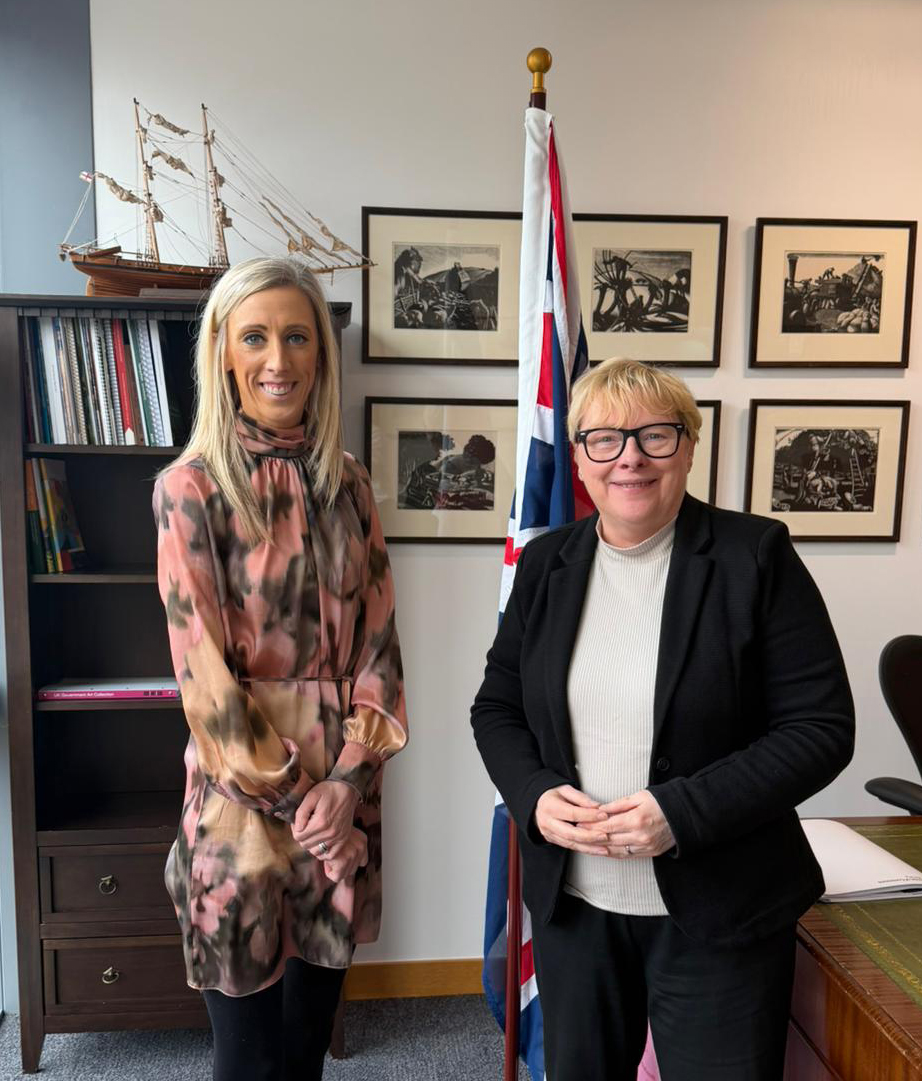
Upper Bann MP Carla Lockhart held a robust and constructive meeting in London this week with DEFRA Minister Dame Angela Eagle.
The MP said: “I welcomed the opportunity to meet with the Minister for an engaging and detailed discussion on a range of pressing issues facing the UK’s agri-food sector.
“The agenda was extensive, reflecting the scale and urgency of the challenges facing farmers and producers. I will be furnishing the Minister with further details on a number of the issues raised, and I look forward to following up on key points in the weeks ahead.”
Agriculture is a cornerstone of the UK’s rural economy. Carla Lockhart MP added: “Our farmers are expected to compete globally while operating in a complex regulatory environment. I have consistently raised concerns in Westminster that these mounting challenges create a structural disadvantage for producers, particularly in light of the ongoing implications of the Windsor Framework, which continue to create friction within the internal UK market.”
Another central issue discussed was the ongoing threat posed by illegal meat imports at key UK ports. “Illegal meat imports are an existential threat to both human and animal health,” outlined Ms Lockhart. “For more than twelve months I have been highlighting that the UK’s border systems are under-resourced and not fit for purpose. This is not a minor issue – it has the potential to cripple our agri-food industry overnight.
“The lack of effective biosecurity at our ports is potentially opening the floodgates to deeply damaging livestock diseases such as Foot and Mouth and African Swine Fever, which would have devastating economic consequences. I urged the DEFRA Minister to double down on efforts to protect our borders, our livestock industry and the wider agri-food sector, through proper resourcing, stronger enforcement, and systems that are fit to deal with the scale of this threat.”
The DUP’s Agriculture spokesperson continued: “We also discussed a range of other critical economic and environmental pressures facing farm businesses. These are not isolated challenges – they are interconnected and require urgent, co-ordinated action from the UK Government and the local Stormont Assembly.
“The impact of global instability is very real. The ongoing conflict in the Middle East is already contributing to volatility in input costs such as fuel, fertiliser and feed. These are essential costs, not optional extras, and this uncertainty further erodes already tight farm margins and undermines long-term viability.”
Serious concerns were also raised regarding proposed changes to inheritance tax. The MP added: “The Labour Party’s pending policy risks dismantling generational family farms. I have spoken out clearly against policies that would place additional burdens on family-run farms and rural businesses. Agricultural and business property relief are not tax loopholes, they are essential to ensuring farms can be passed from one generation to the next, safeguarding both livelihoods and food production.
“Food security must remain a top priority. Northern Ireland farmers are already operating to high environmental, animal welfare and traceability standards. It would be wholly counterproductive to undermine farmers and replace that production with imported food produced to lower standards.”
The MP also confirmed that employment challenges facing the agri-food and horticulture sectors were also discussed. “There is an urgent requirement for a more flexible and responsive approach to seasonal and migrant workers. I stressed the need for a relaxation of current rules to allow farmers and rural businesses, such as apple and mushroom growers, to access the workforce they need to plant, harvest and process food efficiently.”
In conclusion, Carla Lockhart MP said: “We need the UK Government to recognise the unique pressures facing Northern Ireland and act accordingly. As I have consistently outlined, safeguarding the province’s agricultural industry is not optional – it is essential to the economy, our rural communities, and the long-term sustainability of our agri-food sector.
ENDS
 CLANRYE NEWS